
Uber drivers are flocking to EVs amid high gas prices
The world’s largest ride-hailing app is seeing record EV growth among U.S. drivers, a bright spot for the country’s floundering electric vehicle market.

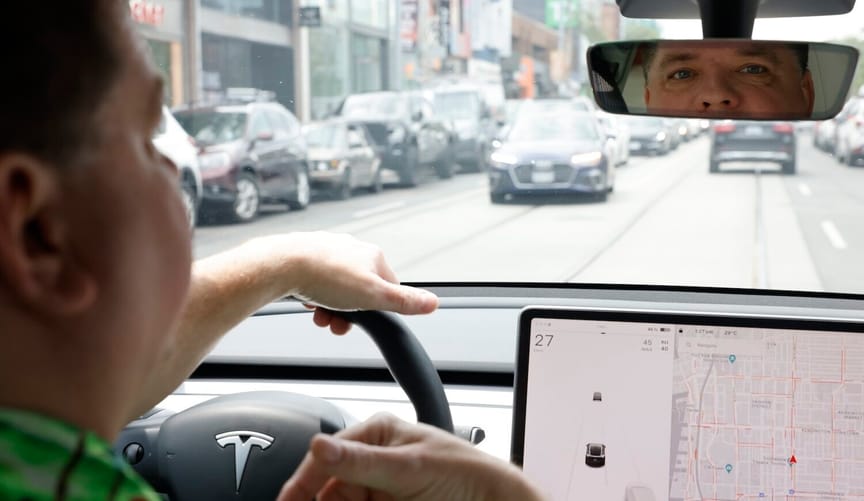
U.S. electric vehicle sales fell off a cliff last year after Republicans deleted the federal EV tax credit. But sky-high gasoline prices are causing EV adoption to soar among one of the populations most exposed to fuel costs: Uber drivers.
The ride-hailing company tracks EV adoption on its platform to measure progress toward a corporate goal to reach 100% electric by 2030 in the U.S., Canada, and Europe. Uber is not on track to hit that ambitious timeline, but a striking trend has emerged from the latest data: Uber drivers in the U.S. and Canada made a smaller share of rides in EVs in the last quarter of 2025 and the first quarter of this year. But from April through September, U.S. Uber drivers set consecutive monthly records for miles driven electric, said Santosh Rao, the company’s global head of mobility electrification.
The U.S. and Israel launched their war with Iran at the end of February, prompting Iran to close the Strait of Hormuz in retaliation. The loss of this key energy supply line rippled through the global market. As the blockade continued, even the U.S.’s world-leading oil production couldn’t shield its drivers from price spikes in this globalized commodity. Domestic average gasoline prices broke $4 per gallon at the end of March, according to AAA, and have stayed above that for almost all the year since.
Uber can’t command its drivers to pick a certain vehicle — they are independent contractors, after all. Its EV data reflects the aggregated decisions of millions of individuals making economic choices about their livelihood. As gas prices ticked higher, the people who routinely fill up a tank once or more per day felt it the hardest, and for six months running, more of them chose electric driving than ever before.

EV advocates and researchers have long argued that the total cost of ownership favors EVs even if they have a higher sticker price than a comparable combustion-engine model. That total cost metric calculates fuel savings over time as well as cheaper maintenance — fewer moving pieces, no oil changes, etc.
The math works out for many Uber drivers. Rao added that, in addition to lower operating costs, electric cars offer smoother and better rides for Uber customers.
But not everyone can spend more up front with an expectation to save money in the long run. The haywire fossil fuel markets, however, made the short-term pain of gasoline dependency so acute that it pushed Uber drivers into cleaner vehicles. It’s as if President Donald Trump’s elective military intervention created an unintended carbon tax.
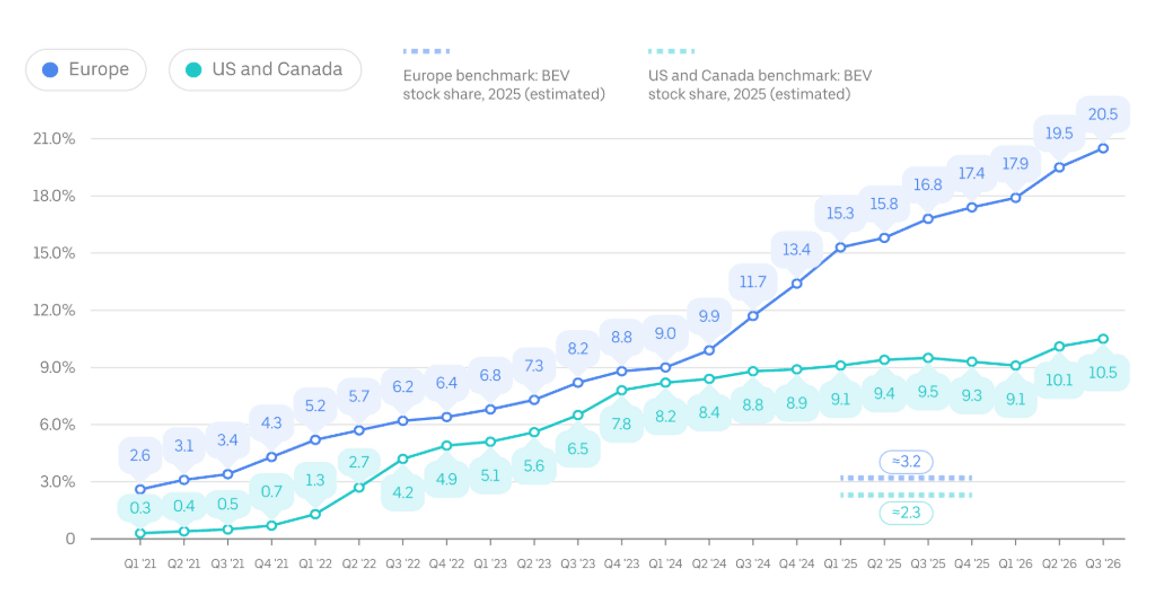
U.S. Uber drivers chose electric cars for one in 10 miles driven as of September. In Europe, which bought more EVs in September than ever before, EVs traversed one in 5 miles driven on the platform.
Globally, the quarterly count of zero-emission Uber trips rose 34% since the first quarter, to 207 million trips. And Uber now hosts 434,000 EV drivers, up 28% since the Q1 report — compare that with the total 10.8 million active drivers and couriers Uber reported in the third quarter (though the electrification reporting tracks only ride-hail drivers, not couriers). A few cities lead the pack: EV miles driven on Uber are now over 50% in Amsterdam, over 40% in London, and over 35% in Vancouver.
In a recent survey of its drivers, Uber found that access to charging has now displaced the cost of EVs as the No. 1 obstacle to adoption. The company is looking for ways to help with that, like testing software in France that helps drivers find a low-priced charger, navigate to it, and pay for charging in the driver app.
More than one in four cars sold worldwide this year will be EVs, according to the International Energy Agency. The actual share of cars on the road that are electric is far smaller — Uber’s analysis pegged it at 2.3% of the vehicle stock in the U.S. and Canada last year, and 3.2% in Europe. Uber’s fleet is tracking ahead of that in those regions, though the company remains a long way from hitting 100%.
“We’re not going to get to those 2030 goals that we have in U.S., Canada, and Europe,” Rao admitted. “We need to see more coordinated industry and policy action for us to be able to get anywhere close to these goals, which we’re not seeing right now.”
The Uber data, then, offers a limited sign that people will make the switch when market conditions favor electric driving. But it also portends that even favorable market conditions won’t drive decarbonization fast enough for the leading climate commitments on that front.
Thanks for reading this article! You can help Canary Media keep producing independent reporting on clean energy by making a tax-deductible donation.
Julian Spector is a senior reporter at Canary Media. He reports on batteries, long-duration energy storage, low-carbon hydrogen, and clean energy breakthroughs around the world.


