Clean energy journalism for a cooler tomorrow

California amps up pressure on grid upgrades that take too long

Transmission lines are hard to build — but they can’t take forever. A new law holds utilities accountable for delays that are holding back gigawatts of clean energy.
By Jeff St. John

  • Link copied to clipboard
Image with utility workers, some on transmission wires, and a white statehouse on a green background
(Binh Nguyen/Canary Media; Geng Yuhe/VCG via Getty Images; Harold Mendoza on Unsplash)

Supported by

This is California Wire, a weekly newsletter from Jeff St. John on the state’s clean energy transition. Subscribe to get it every Wednesday via Substack.

Welcome back to California Wire! This week, I want to dive into a topic that’s both timely and timeless: transmission lines, and how long it takes to build them. California’s lagging grid buildout is holding back gigawatts of clean energy from connecting to the state’s grid. Policymakers and regulators have largely punted on the issue, creating a deficit that will take years to recover from, but they are finally taking some baby steps to address it.

To be clear, major power lines are notoriously difficult to build everywhere, not just in California. That’s why a big chunk of the permitting bill that emerged from the U.S. Senate last week is focused on lifting obstacles to new transmission. We’ll see where that goes.

But California’s climate targets make its transmission problems particularly acute. The state must add 7 to 8 gigawatts of capacity a year for the next two decades to meet those targets — roughly double its current pace of growth. And it won’t be able to do that without more power lines.

Of course, California knows it needs more transmission. The state grid operator has approved just under $28 billion in new projects over the past five years. But the major utilities are lagging on the follow-through.

Nearly 22 GW of renewable generation and battery installations ​“depend on transmission projects that have already experienced a delay in coming online,” according to a November 2025 report from the California Public Utilities Commission. Of those, 13.2 GW ​“have already been delayed or are at risk of delay due to delayed transmission project timelines.”

Last week, California Gov. Gavin Newsom signed legislation that will apply pressure to investor-owned utilities and independent transmission developers to start making progress on these projects. Assembly Bill 2493 orders them to submit project schedules for major transmission upgrades that require a CPUC permit. It also creates a new transmission development monitor position within the CPUC to check whether utilities and developers are on track. If they aren’t, the CPUC must order them to undertake ​“remedial actions.”

The goal is not to punish utilities, but ​“simply to provide more oversight,” said Alex Jackson, executive director of American Clean Power–California, the state branch of the trade group American Clean Power Association, which sponsored the bill along with the Union of Concerned Scientists.

“Every part of the state’s energy planning system depends on utilities getting these projects done on time,” he said. ​“And right now, which projects move forward on what timeline is exclusively the province of the utilities.”

At the very least, clean energy and battery developers would like to have some advance notice on which transmission upgrades are being delayed so that they can plan accordingly. Too often, developers find out quite late in their project’s development cycle that a long-promised, necessary upgrade has been postponed or even canceled.

I spoke to one clean energy developer who described working on a project based ​“on the assumption there would be a substation upgrade completed in late 2026 or early 2027. That’s what had been on the list for years.

“Then we got an email, late on a Friday afternoon, telling us the upgrade would be delayed five years or more,” said the developer, who asked not to be named to avoid drawing the ire of the utility responsible for the delay.

“We want to continue to put this issue in front of policymakers,” he said. ​“It’s a down-in-the-weeds, energy-nerd issue. But the devil’s in the details — and these kinds of details are snarling the system.”

My take

Transmission is one of those problems that puts politicians in a bind, particularly at a time of rising utility costs. Nobody wants a big power line in their backyard. And while the long-term benefits of expanding transmission grids are well proven, building them does impose near-term costs on utility customers. But failing to tackle the barriers to building more transmission in the 2010s is what has led to the current clean energy logjam across much of the country. If we don’t want to face even worse logjams 10 years down the line, we’d better get to work now.

What else I’m watching

Last week, I wrote a story about Newsom’s unexpected decision to sign into law a series of bills aimed at making virtual power plants a bigger part of the state’s grid. Senate Bill 905 and Senate Bill 913 instruct state utility and energy regulators to create pathways for rooftop solar–charged batteries, EV chargers, smart thermostats, controllable appliances, and other devices that Californians are buying and installing in homes and businesses to help reduce the cost of meeting growing electricity demand on the state’s overburdened power grid. For an outgoing governor who vetoed a bunch of VPP bills last year, it’s a welcome change. So is Newsom’s signature on SB 868, which means California is the latest state to make DIY solar systems, known as balcony solar, street legal, so to speak. 

California, bulwark of clean vehicle rules

California just filed its latest legal challenge against the Trump administration’s assault on the state’s vehicle emissions and fuel economy regulations. Friday’s lawsuit from Attorney General Rob Bonta and 26 states, counties, and cities is in response to new rules from the U.S. Department of Transportation and National Highway Traffic Safety Administration that would sharply reduce federal fuel economy standards for cars and light trucks. California has also filed suit to block efforts by the Trump administration and Republicans in Congress to rescind the state’s legal authority to set its own vehicle emissions standards and mandate the end of sales of gasoline-fueled vehicles in the state by 2035.

The lawsuits underscore California’s outsize role in setting vehicle standards that influence the U.S. market as a whole. A legal victory for the state won’t just protect its own residents. As my colleagues Wendy Becktold and Ysabelle Kempe wrote, the Trump administration’s own assessment finds that its plan to gut fuel economy standards means consumers will pay more for fuel than the estimated savings on the new, less-efficient cars.

Transmission timeline, anyone? 

Wondering just how long it takes to build a new transmission line, and how many of them actually get built? This chart from a 2025 report by the CPUC’s Public Advocates Office tracks the status of transmission projects approved since 2000. As you can see, just under half of those projects have actually been built and turned on since then. 

California Wire get-together in Oakland and Canary Live Bay Area!

Do you live in the San Francisco Bay Area? Do you read California Wire? Do you want to chat with me and also meet other people who share your California energy and climate interests? On Wednesday, Oct. 14, at around 6 p.m., I’ll be hanging out with Canary Media Managing Editor Wendy Becktold at Drake’s Dealership in downtown Oakland. (Drake’s is a great brewpub with outdoor seating, not a used-car lot, in case you were wondering.) It’ll be a super-casual affair, with great food, great drinks, and great conversation. Come on by!

You can also catch me, along with many climate and energy luminaries, at our much bigger Canary Live Bay Area event on Nov. 10 in Berkeley. Hope to see you there! 

One more thing

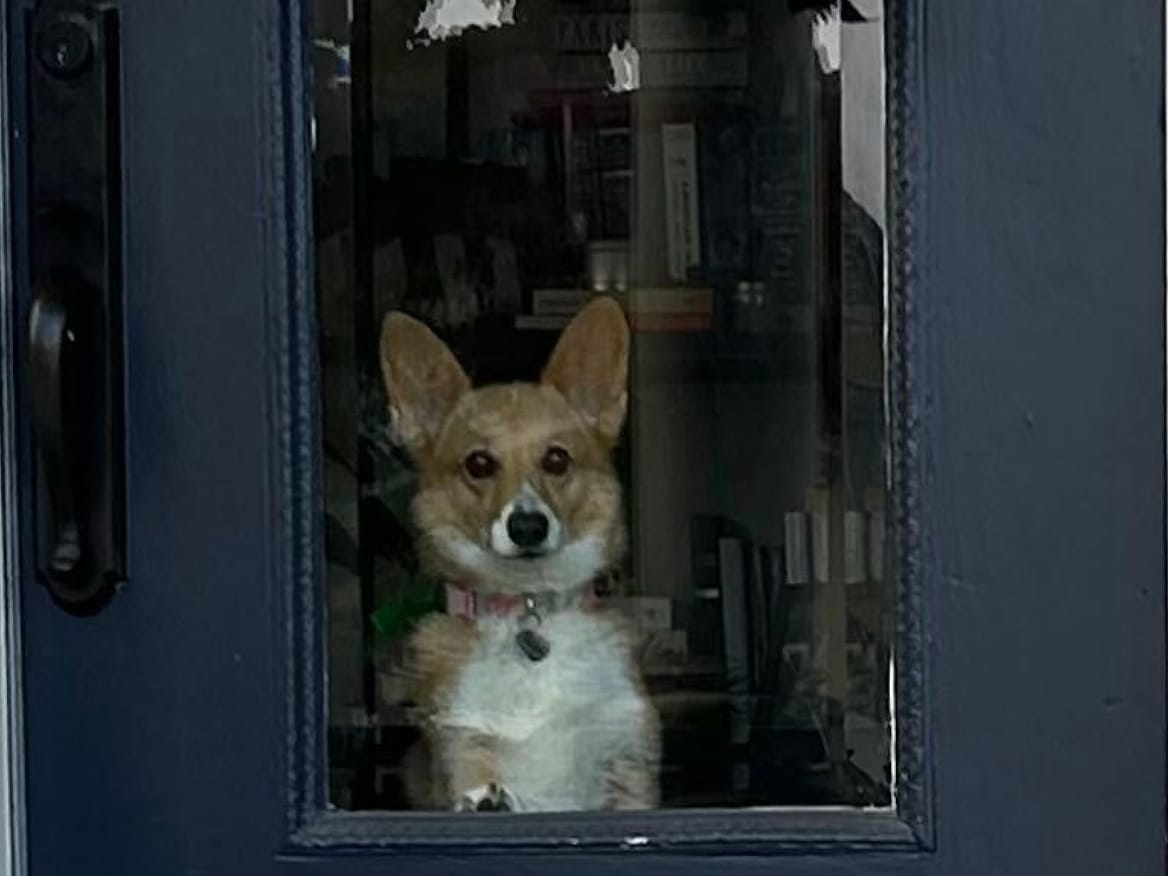
This weekend, my wife and I went to all three days of the Hardly Strictly Bluegrass festival, held annually in San Francisco’s Golden Gate Park. Man, what a lineup! We caught Tyler Ballgame, Los Lobos, My Morning Jacket, Aaron Lee Tasjan, Gillian Welch and David Rawlings, Rilo Kiley, Jesse Welles, and, to close out a perfect weekend, Robert Plant with a truly majestic power folk backing band. Lily the corgi doesn’t like crowds, so we left her at home. She was not happy about that, as you can see from our parting photo on Saturday morning. (We do love to see her pop up in our front door window to greet us when we get home, though.)

Corgi looking out a door window
Lily the corgi is mad at us for leaving her at home. (Jeff St. John)

This signup form requires necessary cookies.

Allow marketing cookies to load the newsletter signup form.

Jeff St. John is chief reporter and policy specialist at Canary Media. He covers innovative grid technologies, rooftop solar and batteries, clean hydrogen, EV charging, and more.