


It’s official: 2026 is the year of lost solar in North Carolina
State regulators have doubled down on a spring decision to cancel 2026 bids for Duke Energy solar contracts, amounting to a gigawatt’s worth of missing procurement.

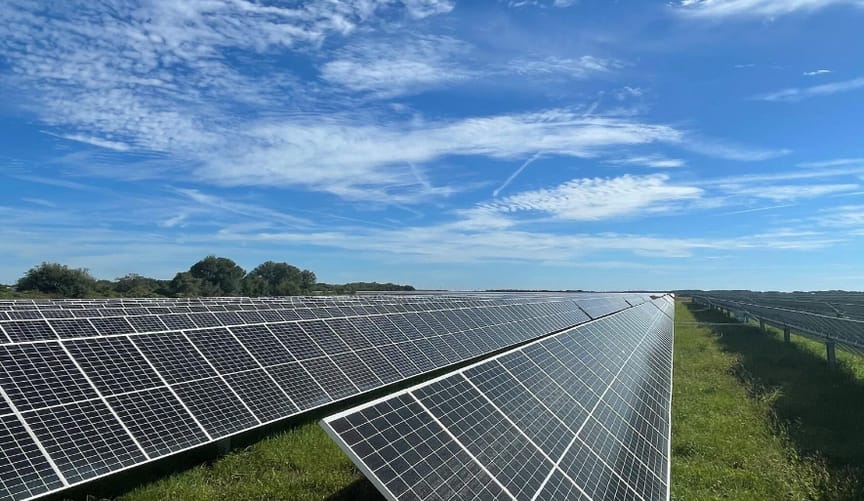
This spring, when North Carolina’s top utility regulator abruptly canceled bidding for new Duke Energy large solar contracts for 2026, critics filed an array of legal motions in protest, calling the unilateral order from the chair of the Utilities Commission “arbitrary and capricious” — and likely illegal.
But as the cases dragged on through the summer and fall, the clean energy industry and its advocates began to worry they had lost by default: The year was almost over, leaving no time for Duke to solicit proposals for new solar projects.
Now, the loss is official. On Monday, as part of its decision approving Duke’s long-term carbon reduction plan, the commission ruled that some solar megawatts the company had planned to procure in 2026 should be punted to future years. On Tuesday, the panel rejected pleas from a clean energy trade group and a coalition of nonprofits that it “reconsider” its spring order.
The rulings mean Duke will contract for an additional 2.3 gigawatts of solar to come online by 2034, the company says, bringing the total added under a 2021 state law to about 6.4 GW. That figure reflects over a gigawatt of solar foregone this year alone.
“We just completely skipped a year of solar procurement in the state,” said Nick Jimenez, senior attorney with the Southern Environmental Law Center, which appealed the spring order on behalf of the Southern Alliance for Clean Energy, Vote Solar, and the Sierra Club. “That’s a huge missed opportunity in terms of bringing low-cost generation online in North Carolina.”
Jimenez and other advocates see the meager utility-scale solar investment as one among many flaws in Duke’s latest carbon reduction plan, a document required every two years to chart its course to zero carbon by 2050. The blueprint includes one of the largest natural gas buildouts in the U.S. and a delay in the retirement of costly coal plants.
The 2026 solar backsliding comes in part because of punishing tariffs and expiring tax credits pushed through by President Donald Trump and congressional Republicans; in their orders, commissioners noted that both policies make the renewable energy resource more expensive for customers. They also said there was a “reduced near-term need for solar” after the Republican-led state legislature last year repealed a requirement that Duke cut its carbon pollution by 70% by 2030.
Playing catch-up in future years is certainly possible, solar industry leaders say, but it will be more expensive for North Carolina consumers, since continued inflation and tariff pressures make it likely that solar prices will rise after 2026.
“We can no longer expect that the price of solar is going to go down every year,” said Carson Harkrader, a solar developer and chair of the Carolinas Clean Energy Business Association, the trade group that challenged the spring cancellation. “So when solar procurements are pushed out, we lose the opportunity to lock in our prices as early as possible and deliver lower-priced solar energy for ratepayers.”
Even taking into account strong economic headwinds, advocates contend that Duke is planning for too little solar. An expert witness testifying this summer for Harkrader’s group, for instance, urged regulators to direct the company to procure up to 1,200 MW a year in the next two years, rather than the 770 MW proposed by Duke.
Indeed, the solar industry is now preparing to make up for some lost procurement in 2026 by approaching that higher annual target. “We have installed that volume of utility-scale solar annually in the past,” she said. “Our members remain committed to this market, to driving down costs for ratepayers, and to bringing projects online quickly to meet our state’s energy needs.”
For its part, Duke testified this summer that procuring 2.3 GW of solar by the end of 2028 is still doable, despite the lack of action this year. Under this week’s rulings, the company now has 10 days to tell commissioners exactly how it plans to make the projections happen.
“We’re still evaluating,” said Duke spokesperson Bill Norton. “We need to update the commission by Nov. 26, so we’ll certainly know more by then.”
No matter what, Harkrader said, consistent signals from regulators and the utility will be vital moving forward. “The best ways that our companies can bring lower prices for consumers is through business certainty and clear annual procurements that we can plan towards,” she said. “That helps us bring down costs because we know that our investments will lead to real projects, and that leads to more competition.”
Elizabeth Ouzts is a contributing reporter at Canary Media who covers North Carolina and Virginia.


