


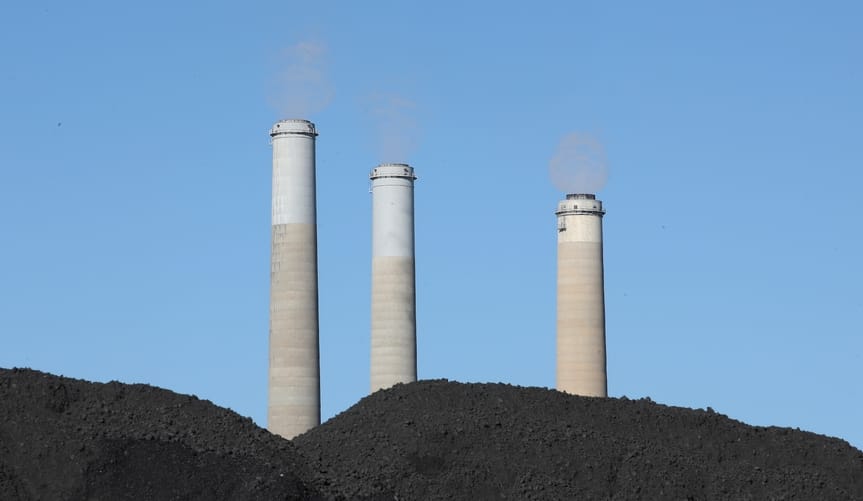
The U.S. electricity sector is set to emit less planet-warming carbon dioxide this year despite record-high demand and the Trump administration’s efforts to prop up uncompetitive coal-fired power plants.
Power plants burned 10% less coal through July of this year, according to a new analysis of federal data from think tank Energy Innovation. That drop in coal consumption caused power sector emissions to decline in the first half of 2026 — and puts the U.S. on track for a 2% reduction in overall energy-related emissions across this entire year.
It’s a reversal from 2025, when coal generation shot up 13% and caused economy-wide emissions to jump 2.4%. Analysts attributed that to a surge in electricity demand coupled with unusually high natural gas prices, which made coal more economically attractive.
This year, though, coal plants are just not running as often. Through August 2026, coal plants ran an average of 46.7% of the time, compared with 49.7% over the same period last year.
The data suggests that coal’s resurgence last year was a blip rather than the start of a boom, even as electricity demand has continued to soar this year.
Coal’s decline is particularly notable because the White House has employed aggressive and at times extralegal means to boost the fuel, which pollutes the air and water with mercury and other toxins while also emitting more carbon dioxide than other power sources.
The Department of Energy has been ordering coal plants to stay open past their planned retirement dates on the grounds of an alleged energy crisis. These orders have burdened consumers with hundreds of millions of dollars in costs, despite some of the plants being too run-down to produce any power. The DOE also announced hundreds of millions of dollars in funding coal plants, while the Environmental Protection Agency has rolled back regulations on pollution from the facilities.
Around 48 gigawatts of coal capacity shuttered in Trump’s first term, far more than in either of President Barack Obama’s terms in the White House. Last year saw a far smaller amount of coal retirements, and so this year, the fleet has shrunk by only 1.6%. It now stands at about 167.5 GW, said report author Robbie Orvis, Energy Innovation’s senior director of modeling and analysis.
But just because old coal plants are sticking around, it doesn’t mean that they’re contributing more to the energy system.
What else is picking up the slack? Not combined-cycle gas turbines, the large-format workhorses of the electricity sector. Through August, they ran at a slightly lower rate than they did last year. Overall gas consumption at power plants did tick up 3.8%, however, indicating greater production from different types of gas facilities, like peaker plants, for example.
At the same time, new solar plants have been surging onto the grid, pushing large-scale solar generation up by a projected 21% this year, per federal data. In May, for the first month ever, solar outproduced coal on the U.S. grid, think tank Ember noted. And batteries have kept up their charge, visibly displacing gas in the high-value evening peak hours in California, Texas, and other markets.
When coal use declines as gas plants stay roughly on track and renewables grow quickly, the outcome is what you’d expect, and what we’re seeing so far this year: Emissions will fall.


