Clean energy journalism for a cooler tomorrow

California’s long road to make EV charging more reliable

Can the state regulate — and innovate — its way to more reliable public EV charging? Here’s what industry experts make of its latest efforts.

By Jeff St. John

  • Link copied to clipboard
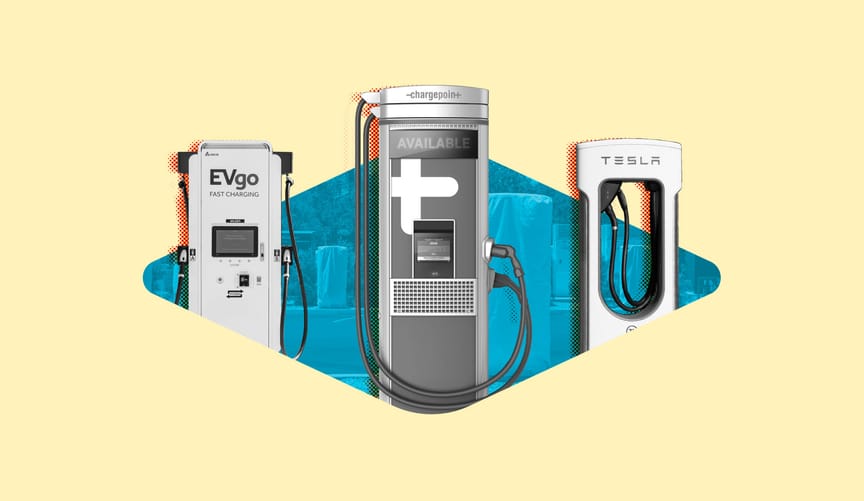
Photo illustration of three EV chargers on a yellow background with a blue triangle

(Binh Nguyen/Canary Media; EVGo; Chargepoint; Unsplash; Anjali Sharif-Paul/MediaNewsGroup/The Press-Enterprise via Getty Images)

Supported by

This is California Wire, a weekly newsletter from Jeff St. John on the state’s clean energy transition. Subscribe to get it every Thursday via Substack.

Welcome back to California Wire! Today’s topic is public EV chargers and California’s long and winding road to make them reliable. In 2023, I wrote a three-part series explaining how unreliable chargers were a significant impediment to EV adoption across the country and what to do about it. The Biden administration attached reliability requirements to its $5 billion EV-charger program, which got the ball rolling, but the Trump administration has mangled federal leadership on this front, leaving states to pick up the slack. California has more EVs than any other state, and thus more reason to take the lead on the issue. 

Laws passed in 2022 and 2023 ordered the California Energy Commission (CEC) to enforce reliability and data-sharing standards for EV-charging installers that get money from state agencies or regulated utilities. It’s taken years, but those rules are finally in place.

Now, to access the $55 million in incentives available from the California Electric Vehicle Infrastructure Project (CALeVIP), applicants have to follow exacting requirements, including using approved equipment and software providers and producing hourly performance data. 

Not everyone is happy about that. Someone who works for a big charging network told me the CEC’s regulations are ​“largely an onerous data-reporting exercise” that won’t ​“move the needle on reliability.” 

Obrie Hostetter, director of fleet decarbonization programs at the Center for Sustainable Energy, a nonprofit that manages the CALeVIP program, understands these concerns. But projects that use public funds need to reliably serve the public, she said — and collecting performance data is a vital way to ensure that’s happening. 

One CEC requirement is that all publicly funded direct-current fast chargers installed on or after Sept. 28 support OCPP 2.0.1, the latest version of the Open Charge Point Protocol, a technology standard that allows EV chargers and network management systems from different vendors to communicate. The idea is to lessen the risk of chargers — and drivers — being stranded if manufacturers or network operators go out of business, Hostetter said.

This isn’t a hypothetical problem. Back in 2024, Enel X Way shuttered its North American charging business and abandoned roughly 25,000 of its JuiceBox commercial chargers using nonstandard software. 

Michael Bakunin, CEO of EV-charging software vendor Epic Charging, worked with owners of some of those chargers to migrate them to his company’s software and keep them running. It wasn’t easy, he told me. 

Neither was meeting the CEC’s new OCPP rules, he added. ​“They have very strict requirements.” But the regulations will hopefully ensure that the next generation of EV chargers can swap software providers if necessary. 

There’s still a lot more work to be done to fully guarantee charger reliability. Kameale Terry, CEO and co-founder of ChargerHelp, which repairs chargers across the country, says missing or incomplete data is a major challenge. That’s why ChargerHelp and other companies lobbied to pass the 2022 law that ordered the CEC to start collecting more of it. 

But repair crews still don’t have access to all the information they need to figure out what’s gone wrong with malfunctioning chargers, she said. Nor are there clear rules to force charging hardware and software companies to effectively manage the ​“handoffs” between charger diagnostics, EV communications, payment authorizations, and all the other things that can cause a charging session to fail, she said. 

How can California agencies help industry solve these kinds of problems? Terry highlighted the $4 million CEC grant for the Capital Charge Yard, a Sacramento testing lab that opened in August involving EV and charging companies including ABB, ChargePoint, EVgo, Hubject, Rivian, and Tesla. 

The nonprofit California Energy, Power, and Innovation Collaborative, which manages the Charge Yard, already hosts training for EV and charger technicians. As a CEC-funded testing lab, it can extend that effort to ​“make sure that chargers work as they’re expected, the first time that you plug them in,” said Orville Thomas, the nonprofit’s CEO. That way, ​“when everything is fully adopted and out in the open, things work as they’re supposed to.” 

My take

Getting EVs and chargers and software and payment platforms and repair crews on the same page is a multiplayer game — one in which the government is both the referee and the coach. California should certainly set standards to ensure public dollars are going to companies that offer reliable service. But the state can also provide the safe spaces, so to speak, for companies to figure out how to get their tech to work in tandem. Think of it as the stick of regulation and the carrot of innovation. 

What else I’m watching

Speaking of the proper role of government in spurring clean transportation innovation, I’m truly ambivalent about this Los Angeles Times story. It makes a big deal out of how a fraction of money from California’s Hybrid and Zero-Emission Truck and Bus Voucher Incentive Project (HVIP), the state’s premier incentive program for medium- and heavy-duty clean vehicles, ended up paying for buses and trucks that broke down or were abandoned by defunct manufacturers. 

Journalists should monitor government programs to ensure taxpayer money is spent prudently. But the instances of wrongdoing cited by the LA Times weren’t ignored by the California Air Resources Board (CARB), the program’s administrator — they were discovered by it, as the agency pointed out in a rebuttal to the story. 

My theory here is that some companies and agencies used a small portion of HVIP incentives to buy vehicles from untested and unreliable companies. HVIP has been around for 17 years. It had plenty of early hiccups but has also finessed its processes. Now, we’ve got companies like Tesla bringing impressive vehicles to market, and California is addressing price gouging by truck manufacturers seeking to take advantage of incentives. 

And as state Sen. Henry Stern, a Los Angeles Democrat and nonvoting CARB board member, told the LA Times in a follow-up story, efforts to police vehicle manufacturers must be balanced against the fact that ​“we’re in a race against time” to clean up the state’s heavy vehicle fleets. 

Big incentives for ride-hail drivers to go electric

California law requires Uber, Lyft, and other ride-hailing fleets to be made up of 90 percent EVs and reach zero carbon emissions by 2030. I’ve always wondered how such a mandate can possibly be enforced, given that the companies’ business model relies on drivers using their own vehicles for work. 

The California Public Utilities Commission is finally doing something about that with its Rideshare Incentives for Driving Electric program. Starting next month, RIDE will offer lucrative incentives of up to $20,300 toward the purchase or lease of a new zero-emissions vehicle for ​“income-qualified, high-volume drivers” working with Uber, Lyft, or HopSkipDrive. 

I’m one of those annoying reporters who asks every ride-hail driver I meet if they’ve been offered any good deals to go electric. Most say the cost of the EV leases that Lyft and Uber offer outweighs any extra incentives that accompany them — and that was before those companies slashed their EV incentives last year in the face of the Trump administration’s attacks on clean cars. I’d like to see the ride-hail companies pitch in to match California’s largesse. 

Photo of the week

My wife, my dad, Lily the corgi, and I went to our local No Kings rally in Alameda last Saturday. Lily was a star attraction, getting a lot of love from our fellow Alamedans, including our wonderful neighbor, who took this photo for us. (Thanks, M.C.!) 

Tara and Jeff and Lily at No Kings rally, Alameda, California, October 2026

(M.C. Blakeman)

This signup form requires necessary cookies.

Allow marketing cookies to load the newsletter signup form.

Jeff St. John is chief reporter and policy specialist at Canary Media. He covers innovative grid technologies, rooftop solar and batteries, clean hydrogen, EV charging, and more.