Next Upcoming
Rural America & The Clean Energy Transition at Climate Week NYC
By Canary Media
Canary Media’s Electrified Life column shares real-world tales, tips, and insights to demystify what individuals can do to shift their homes and lives to clean electric power.
When the power goes out, a home battery can keep you going.
Energy storage, often paired with rooftop solar, has taken off in the U.S. in recent years as households look for ways to lower their utility bills and stay comfy during grid blackouts. But professionally installed partial- and whole-home battery systems aren’t right for everyone: They’re not only hardwired into a home — a change renters don’t usually have the authority to make — but also pricey. You should expect to pay at least $15,000 for one of these setups.
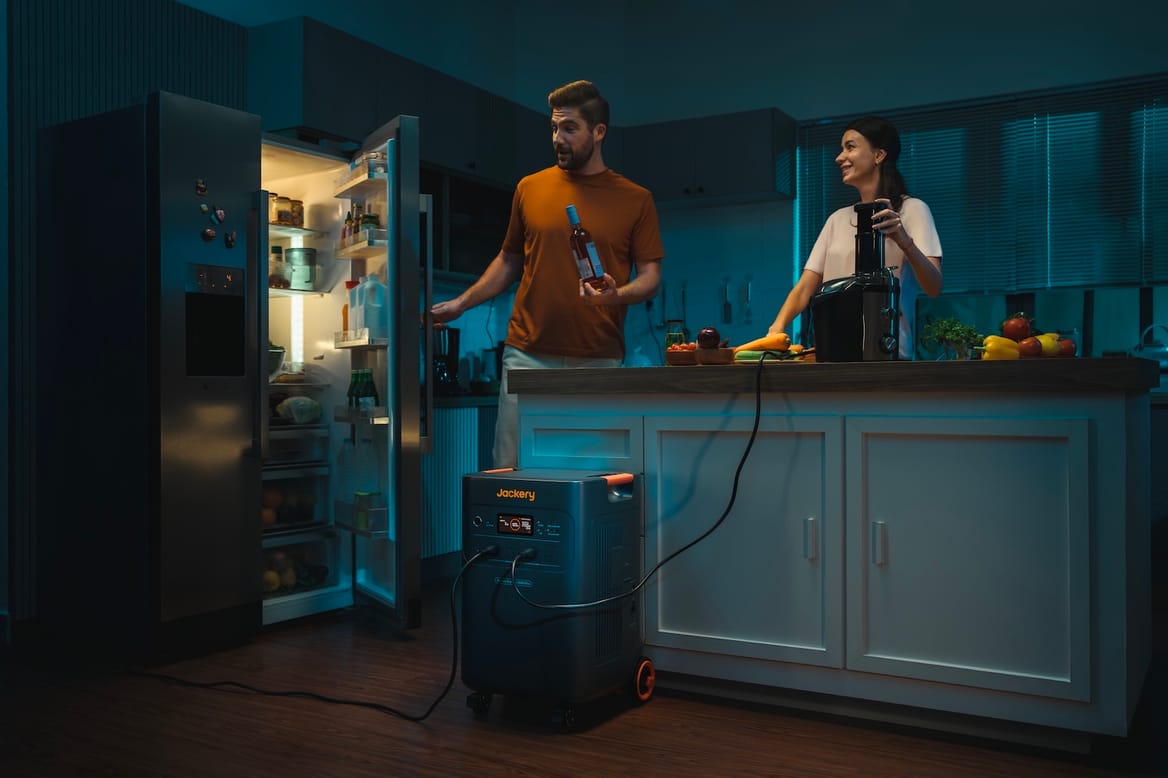
Luckily, there’s another option: portable batteries that can recharge from a standard home or car outlet or from portable solar panels. Although typically much less powerful than their whole-home counterparts, such DIY systems are far cheaper — and don’t require an electrician to set up. The rapid proliferation of the tech, known as portable power stations or solar generators, is democratizing clean, gas-free backup power more than ever.
These plug-and-play batteries, which range from the size of a toaster to a carry-on suitcase, have ports where you can plug in a few devices and appliances. They retail for several hundred to a few thousand dollars, depending on their storage capacity, and are widely available online and at big-box stores like Best Buy, Costco, and Home Depot. Some products, via their apps, can even shave your electric bill by automatically banking grid electricity during off-peak hours when it’s cheap, so you can pull the stored power during high-demand periods when it’s more expensive.
The market for portable batteries “has seen so much growth,” said Brian Essenmacher, North America head of business development for EcoFlow, which has manufactured this type of equipment since 2017. “They’re clean, they’re safe, there’s no maintenance, and they’re emissions-free. They can really be used by anyone to power the critical devices in the home.”
Portable power stations are mid-sized in the backup-battery bestiary. With a storage capacity of about 500 watt-hours to 4,000 watt-hours, these products are larger than power banks (roughly 7.5 Wh to 75 Wh), which can recharge a phone or a laptop, but typically more diminutive than batteries paired with home solar, like the 13,500-Wh Tesla Powerwall 3. Blurring the lines, though, some power stations can be expanded with additional battery packs to grow into 60,000 Wh or larger behemoths.
The portable tech can power a wide array of devices you might need during an outage. At home, that includes phones, computers, refrigerators, window air conditioners, “micro” heat pumps, TVs, fish-tank aerators, CPAP machines, baby monitors, Wi-Fi routers, sump pumps, and power tools. With some creativity, it can even be used to top off an EV.
The tech also enables outdoor activities, like filming, DJing, movie-projecting, camera-charging, water-boiling, and grilling. In recent years, the systems have pulled off a quiet revolution among the van-life and RV communities, who are increasingly picking batteries over polluting gas generators.
Ellen Vig, a semiretired registered nurse whose home base is in Billerica, Massachusetts, loves to boondock her minivan-turned-camper at the beach. And she’s never without her portable power station to keep her in comfort while she’s off-grid.
“It’s so nice to have a refrigerator and be able to use fans and charge your phone,” said Vig, who goes by “Electric Ellen, The Power Lady!” on YouTube and travels to RV and van-life meetups around the country answering people’s questions about portable backup power. “I’m a glamper, not a camper.”
For short-term use, Wirecutter recommends the Jackery Explorer 300 (293 Wh) at $279; for maximum battery life, the EcoFlow Delta 2 Max (2,048 Wh) at $949; and for a system that could be expanded to whole-home backup, the EcoFlow Delta Pro Ultra (6,000 Wh) at $3,999.
These products can be a surprisingly good value on a per-energy-unit basis. A $15,000 Tesla Powerwall 3 is $1,111 per kWh. The EcoFlow Delta 2 Max is $463 per kWh — less than half the Tesla tech.
Which portable power station is right for you? The first step is figuring out what you want to back up and thus how many watt-hours you need. List the devices you plan to power and a few of their attributes: their average and maximum power draws (in watts, and often listed in a label on the product itself or searchable online) and how long you plan to run them on backup power (in hours). Vig put together a handy template worksheet to crunch your total demand. Just copy it to edit.
I tried it — and was flabbergasted at my home’s energy decadence. Backing up just the essentials — window heat pump, fridge, laptop, and Wi-Fi router — for a day would take a whopping 14,000 Wh. A system that big would bust my budget, so I’m thinking something smaller will have to do.
Here are some key features besides size to look for in portable batteries:
Some other things to consider include how many outlets (AC, DC, and USB) the system has, the maximum watts each outlet can handle, how loud its internal fans get, how weatherproof the system is, how fast it charges, and if the company uses proprietary cables for connecting to solar.
The backup tech is rapidly improving. “Power stations are getting lighter, smaller, and more powerful, and they’re charging faster,” Vig said. A 1,024-Wh system would have taken her six or seven hours to recharge in the past, she noted. Now, she has one that charges up in roughly an hour.
Companies are also rolling out sleek new form factors. In the last few months, Bluetti, Jackery, and Pila Energy began shipping briefcase-size systems that can sit on top of a fridge to conveniently provide the appliance with backup power.
More innovation is on the horizon to get daily use out of portable power stations. Most products available in the U.S. can’t deliver electricity into a building’s outlet; they can only draw power from it. But, as with plug-in solar, plug-in batteries that can push electricity into your home are already available in Europe and are starting to pop up here.
These devices can power appliances plugged into the wall, providing a seamless way to share stored energy across different rooms while taking advantage of favorable electricity rates. It’s important to note that this functionality won’t work during a blackout, though, to prevent any risk of shocking lineworkers; instead you’d need to manually plug appliances into the battery’s AC outlets to keep them going.
Eight states have now passed plug-in solar laws, which allow power to flow into a home outlet, opening the door to plug-in batteries, said Rachel Stotts, senior public relations manager at Jackery. Competitor EcoFlow has begun to sell its plug-in Stream Ultra power station in the U.S., but has so far limited shipping to Utah and Maryland, two of the first states to legalize balcony solar. As of Monday, the product was sold out.
Jackery, which sells these two-way batteries in Europe, plans to bring them to the U.S. market once it decides how to accommodate different state regulations, Stotts said.
The company doesn’t have a release date, she noted. But “we’re hurrying.”
Have you relied on a portable home battery for clean backup power in an emergency? Share your story with me at [email protected].
Electric vehicles
Electric vehicles
Clean energy manufacturing
This video requires marketing cookies.
Update your cookie preferences to watch the video.