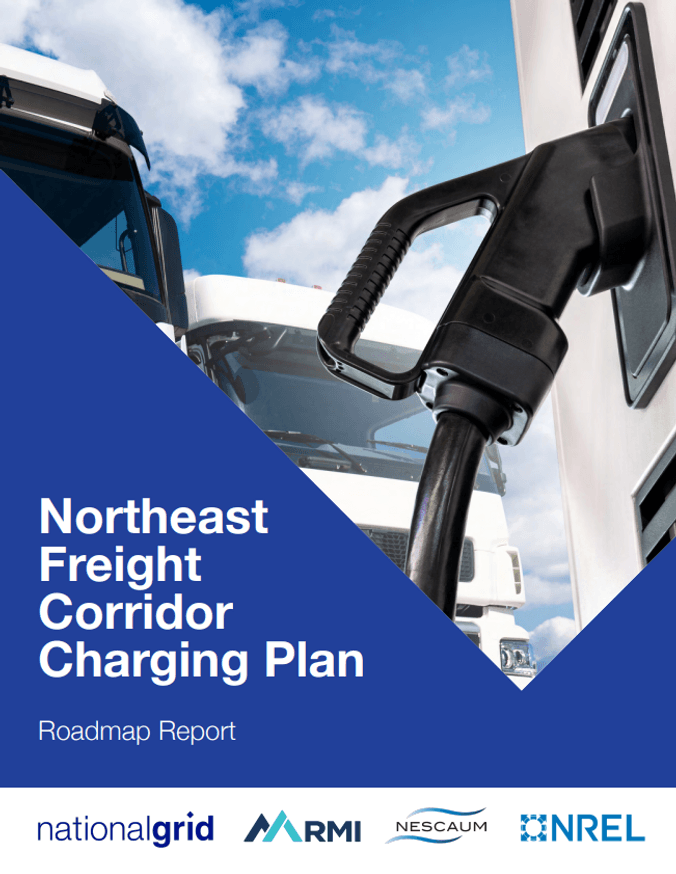
Biden puts $632 million toward new EV chargers

ELECTRIC VEHICLES: The Biden administration awards $623 million for 47 electric vehicle charging projects across the country, with the money set to fund 7,500 new charging ports. (Associated Press)
ALSO:
- As gas prices fall below $3 per gallon, it still remains cheaper to charge an electric vehicle — the equivalent of $1.41 per gallon, on average. (Yale Climate Connections)
- Virginia schools have used federal funding, public-private partnerships and direct purchases to acquire the fourth highest number of electric school buses in the U.S. despite limited state funding. (Energy News Network)
EMISSIONS: U.S. power sector emissions dropped 8% in 2023 from the year before, largely thanks to a record number of new solar and utility-scale battery installations. (Canary Media)
CLIMATE:
- The U.S. saw a record number of billion-dollar disasters last year, facing 28 instances of intense flooding, tornadoes, and other severe weather. (Yale Climate Connections)
- Researchers find human-caused climate change has diminished Northeast and Southwest snow levels, threatening water supplies and hydropower generation in the West and recreation in the East. (New York Times)
CLEAN ENERGY: The world’s renewable energy capacity skyrocketed in 2023, growing at its fastest pace in 20 years, the International Energy Agency says. (Guardian)
OIL & GAS:
- A top oil and gas lobbying group launches an advertising campaign meant to promote U.S. fossil fuel production as “vital” to supplying the world with “cleaner, more reliable energy.” (Guardian)
- A Republican senator and the head of a small oil and gas company both had assistance from the same oil lobbyist as they testified against the EPA’s proposed methane fee this week, submitting remarks that were almost identical in some spots. (E&E News)
- The Alaska Indigenous community closest to the Willow drilling project withdraws its opposition to the development on the condition that ConocoPhillips protects subsistence resources. (Northern Journal)
BUILDINGS:
- Electrification and energy efficiency can reduce buildings’ energy intensity by nearly 40% relative to current levels and generate $2 trillion in annual savings, according to a recent report. (Facilities Dive)
- Boston’s mayor teases plans for a networked geothermal heating and cooling system and a ban on fossil fuel use in new city-owned buildings in her annual State of the City speech. (WCVB, Boston Globe)
SOLAR:
- U.S. solar panel manufacturer Auxin files another lawsuit against the federal government, alleging a 2022 order to pause panel import tariffs is harming domestic companies. (Canary Media)
- After establishing a game-changing solar panel factory in Georgia in 2019, Qcells nears completion of a second plant that will feature the country’s first fully integrated supply chain for solar manufacturing. (Atlanta Journal-Constitution)
- Washington state lawmakers introduce bills aimed at expanding underserved residents’ access to community solar. (PV Magazine)
POLITICS: Republican Sen. Bill Cassidy says long-stalled energy project permitting reform will likely only happen as part of a bipartisan “grand bargain” that would need to include more precise pollutant measurements. (The Hill)
PIPELINES: After failed efforts to change state law, Iowa lawmakers suggest that blocking the use of eminent domain for carbon pipelines may require intervention by the U.S. Supreme Court. (Cedar Rapids Gazette)


