Next Upcoming
Rural America & The Clean Energy Transition at Climate Week NYC
By Canary Media
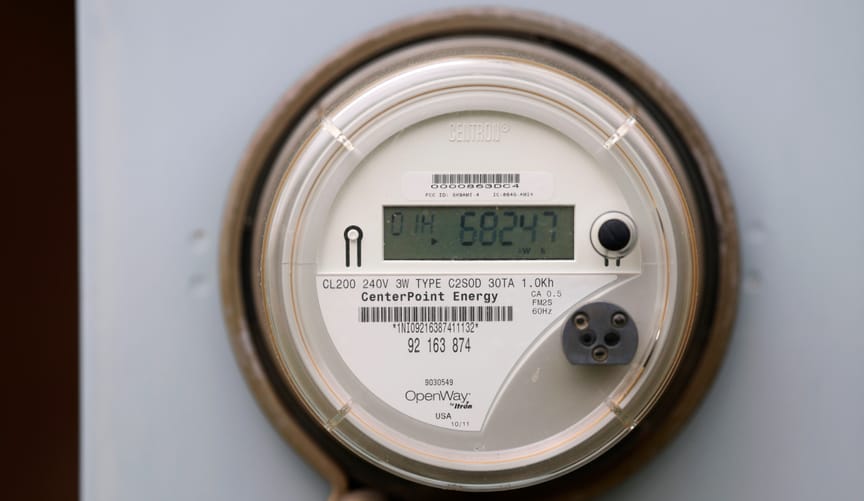
Utilities have spent nearly $6 billion to install roughly 12 million smart meters at homes and businesses across PJM Interconnection, the biggest U.S. energy market. These devices are meant to help their customers use energy more efficiently and save money.
But within much of PJM’s 13-state territory, these devices have actually made it harder for households to participate in the third-party demand-response programs that promise to deliver those savings. These initiatives pay households to adjust their energy use when the grid needs relief, helping participants make money while also curbing the ballooning costs of meeting PJM’s fast-rising energy demand.
The core problem is that utilities control smart meters — and they’re not sharing the data these demand-response providers need in order to function.
So says a complaint to the Federal Energy Regulatory Commission from Voltus, which manages demand-response and virtual power plant programs across the country, and the Mission:data Coalition, a nonprofit advocacy group that works with third-party companies to try to get more customer data from utilities.
The complaint, filed in October, alleges that aggregators like Voltus cannot access customers’ data from major utilities in Illinois, New Jersey, Pennsylvania, and other PJM states. That’s a problem: These firms can’t participate in those wholesale energy and capacity markets unless they can supply customer data to PJM — and they need access to those markets in order to make money in PJM’s territory.
Ironically, demand-response providers don’t have the same problems working with households with old-fashioned electromechanical meters. PJM allows aggregators to use statistical sampling methods to estimate the load-reduction impact of customers who lack smart meters, said Emily Orvis, Voltus’ vice president of energy markets.
But PJM’s rules effectively assume that if smart meters exist, aggregators can access the data, even though practically they can’t. The net effect: Smart meters have created barriers to market participation that didn’t exist before they were installed, she said.
PJM is facing an energy crisis, with booming power demand from data centers running headlong into a lengthy grid-interconnection bottleneck that’s prevented new generation from coming online.
Independent analysts say virtual power plants and demand-response programs can help alleviate these pressures. But, the FERC complaint alleges, the energy market’s own rules are holding back aggregators like Voltus from living up to their potential in the market.
“We think there are gigawatts of capacity that are stranded because of this data-access issue,” Orvis said.
Utilities have complex regulations and mechanisms for how customers and aggregators can access smart meter data.
The complaint from Voltus and Mission:data details how they unsuccessfully attempted to jump through those hoops, only to discover that utilities’ requirements “are so impracticable as to in effect amount to an inability to obtain data.”
Some utilities required Voltus to submit data-access requests in batches of 10 customers at a time, the complaint stated. Others required customers to submit individual email requests to the utility and then wait two to four weeks for that data to be available to download and give to Voltus. And others declined to share key data from customers’ smart meters with the company, despite those customers giving the utility express permission to do so.
Even some utilities that have adopted Green Button Connect — a technology standard designed to enable electronic exchange of smart meter data from utilities to customers and their chosen third parties — have made it impractical for customers to sign up, Voltus and Mission:data claim.
Orvis highlighted Chicago-area utility Commonwealth Edison, where Voltus had initially enrolled about 20,000 customers to participate in its demand-response services, but was able to get only about 4% of those customers enrolled through the utility’s system.
“This is one of the places that, on paper, has Green Button Connect, which is — or should be — the gold standard for data access,” she said. Those lost sign-ups amounted to about 23 megawatts of capacity, she said.
Voltus has developed some methods to get utility data. For the large commercial and industrial customers that make up the bulk of its demand-response portfolio, the company installs its own specialized meter-reading equipment and manages ongoing email exchanges to share that data with utilities, Orvis said.
But “if you’re going to be dealing with residential customers, or even small commercial customers, it’s not cost-effective to install our meter-reading devices, and it’s not feasible to ask utilities to process tens of thousands of emails at a time,” she said. “We can only serve small customers if we have an efficient, programmatic way to get the data from the utility.”
Michael Murray, president of Mission:data, says the situation in PJM is just one of many examples of utilities withholding smart meter data — and he has the experience to back that up.
Murray co-founded Mission:data in 2013 as part of his successful effort to get California utilities to adopt data-sharing rules for smart meters. In the years since, more than a dozen states have ordered utilities to build digital tools that can allow customers to more easily share their smart meter data with third-party companies.
But most utilities still keep their smart meter data locked up behind byzantine enrollment systems and incompatible data formats, he said. Nonutility energy services providers have long had to engage in costly and onerous workarounds to get the smart meter data they need.
Murray believes state regulators haven’t been diligent enough in pressuring utilities to follow through with data-sharing requirements. “The buck stops with the state,” he said.
To be fair, utilities need to be careful with how they share this data, since they’re legally responsible for protecting customer privacy and data security.
But Murray believes that utilities are using customer data privacy as an excuse to protect their own monopoly power. Utilities, including many in PJM’s territory, have launched their own demand-response programs and time-of-use rates that allow customers to save money by reducing their electric consumption during times of peak demand. That means they “participate as direct competitors to competitive aggregators,” Voltus and Mission:data noted in their FERC complaint.
In a December report, Mission:data and the Open Markets Institute, a nonprofit that advocates against business monopolies, argued that utilities “are now using meter data as a competitive weapon” to protect their monopoly relationship with their customers.
This view has been echoed by the R Street Institute, a free market–oriented think tank. In a November blog post, Chris Villarreal, R Street associate fellow, wrote that access to smart meter data “empowers customers and is vital to the development of new markets. Yet in state after state, the lack of data access rules or policies proved a key impediment to meaningful customer choice.”
The utilities responding to the Voltus and Mission:data complaint don’t see it that way.
Instead, in comments filed with FERC, New Jersey’s Public Service Electric and Gas (PSE&G), Pennsylvania’s Duquesne Light, and Exelon, which owns utilities such as ComEd in Illinois, PECO in Pennsylvania, and Baltimore Gas & Electric, Delmarva and Pepco in the mid-Atlantic region, explained that they’re simply following state laws and regulations.
Exelon told FERC that Voltus and Mission:data should address their concerns instead to “the state commissions that regulate data access.” PSE&G stated that it “has no authorization to establish or operate large-scale automated interval data-sharing systems that would release customer interval data to entities even with individual customer consent.” And Duquesne Light stated that it “can only release customer interval meter data as prescribed by Pennsylvania state law.”
This isn’t the first time FERC has been asked to resolve this dispute between state-regulated utilities and the federal regulations that govern PJM. Back in 2024, FERC rejected a similar complaint from demand-response provider CPower, citing both a lack of evidence that utilities were withholding data and FERC’s lack of jurisdiction to order state-regulated utilities to change their data-sharing rules.
Murray said the new Voltus complaint provides far more detailed evidence than the CPower complaint did.
But he conceded that the proposed remedy available to FERC — ordering PJM to let Voltus and other demand-response companies use statistical sampling methods for customers that have smart meters — doesn’t address the fundamental issues.
PJM opposes the sampling solution, stating in its response to the FERC complaint that this would lead to a “degradation of the quality of information PJM receives.”
That’s why Voltus and Mission:data are also working at the state level, Orvis said. In Illinois, Voltus is involved in a data access working group that is tasked with expanding data-sharing requirements, she said.
Voltus is also pushing state regulators to order utilities to give demand-response aggregators access to data from the electronic data interchange (EDI) platforms that exist to allow other retail electricity providers to compete to serve utility customers in Illinois, Maryland, New Jersey, Ohio, Pennsylvania, and other states, she said.
To date, only one utility in Pennsylvania has allowed Voltus to access this data, Orvis said. Many others expressly prohibit Voltus and other third-party demand-response and virtual power plant companies from doing so.
Ideally, Orvis would like to see more states adopt statewide smart meter data-sharing platforms like Smart Meter Texas, which was put in place nearly two decades ago to enable data sharing between utilities and third-party companies in the state’s competitive energy market.
“Texas has said that customers have paid for advanced metering infrastructure. And because they’ve paid for it, they own the data; utilities don’t,” she said. “The diverse array of retailers in Texas are users of that data, and third-party aggregators like Voltus can also use that. And it’s designed for computer readability — nobody is emailing.”
Whether states will act quickly on smart meter data-sharing reforms is another matter. Murray noted that the Pennsylvania Public Utilities Commission last year issued an order to explore how to make EDI data available to third-party companies. But the regulators have assigned that task to a working group that denied similar requests in 2015, he said.
New Jersey’s Board of Public Utilities has also proposed smart meter data access standards that could expand access, which PSE&G in its FERC comment noted could “provide guidance for consistent and secure sharing” of data. But Murray noted that rulemaking has been underway since 2022 with little progress to show for it.
PJM states including Illinois, Maryland, New Jersey, and Virginia have passed laws and instituted regulations promoting virtual power plants. But companies looking to make that vision a reality will run into serious obstacles unless smart meter data is accessible, Orvis said.
This shouldn’t be framed “as a battle” between utilities and third-party companies, Orvis emphasized. “There’s plenty of untapped potential there.”
Jeff St. John is chief reporter and policy specialist at Canary Media. He covers innovative grid technologies, rooftop solar and batteries, clean hydrogen, EV charging, and more.
Electrification