

New Dem regulators plan to take on Georgia Power’s data center gas boom
For the first time in 30 years, the state’s utility commission will have a Democratic majority — and they’re targeting Georgia Power’s costly fossil gas buildout.

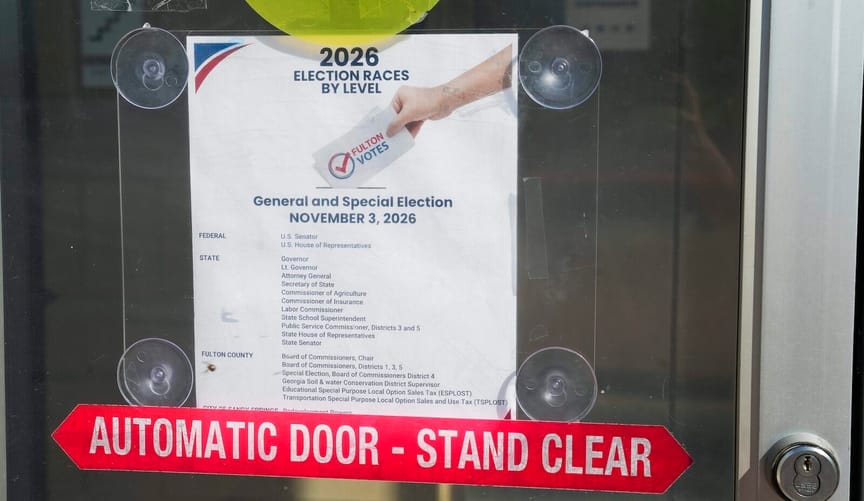
Georgia residents are angry at the state’s unchecked data center boom and rising electric bills — and they voted accordingly in last week’s election.
Democrats won every statewide race in Georgia, including two seats on the Public Service Commission. Republicans had held a majority at the powerful utility regulator for 30 years.
The winning candidates, Commissioner-elect Shelia Edwards and reelected Commissioner Peter Hubbard, have made clear that their top priority is to rein in rising electricity bills from Georgia Power, the state’s biggest utility. That likely means the new Democratic majority will challenge Georgia Power’s plans to enact one of the largest fossil-fuel expansions in the nation.
In December 2025, the Republican-led PSC approved Georgia Power’s plan to build nearly 10 gigawatts of new gas-fired power plants and batteries to serve proposed data centers. It did so despite recommendations from commission staff to approve only about one-third of that capacity right away, given the speculative nature of the data center growth projections that the utility used to justify its buildout.
All three Democrats on the five-member commission have signaled opposition to those plans. The two Democrats already on the commission, Hubbard and Alicia Johnson, tried earlier this year to get the PSC to reconsider the planned gas buildout but were thwarted by the GOP majority.
The five new gas-burning plants planned as part of that buildout could cost customers an estimated $50 billion to $60 billion over their multi-decade lifespan and lock in significant amounts of new greenhouse gas emissions, according to estimates from the Southern Environmental Law Center. Hubbard, who worked for 16 years in utility planning and renewable energy project development, has conducted his own analysis that found a “cost-optimized portfolio” prioritizing solar, batteries, and energy efficiency could meet expected demand and save billions of dollars compared to the utility’s gas-heavy approach.
Georgia Power’s expensive gas buildout would exacerbate the affordability challenges its customers already face.
The PSC has approved six rate hikes from Georgia Power in the past few years, increasing typical residential utility bills by 33%, or more than $500 a year on average. The utility, which earns a set rate of return on what regulators allow it to spend on power plants, has seen profits swell over that same time.
“Georgia Power is making billions while Georgia families are struggling,” Edwards, who owns a communications consulting firm, said during an Oct. 28 press event hosted by the Southern Alliance for Clean Energy, a nonprofit advocacy group. “Something is fundamentally wrong with that picture.”
Controlling data center costs — and making them pay their own way
In February, the PSC voted 3–2 against a motion brought by environmental advocates to reconsider the 10-GW gas buildout, with Hubbard and Johnson voting to block the expansion. The Democratic commissioners argued that the utility had failed to prove that data center growth justified the cost.
Nor was their opposition enough to discourage Georgia Power. Just months later, in April, the utility submitted a new request to the PSC seeking permission to add somewhere between 2 GW and 6 GW of additional “dispatchable capacity resources.” Utility critics fear this new round will also tilt toward a preponderance of gas power plants instead of solar, batteries, or other cleaner options.
Georgia Power says that its broader customer base will be insulated from cost increases related to its gas buildout, and that growing electricity sales will put “downward pressure” on customer rates.
Last year, the all-Republican commission approved a rule that would allow Georgia Power to force data centers and other large customers to cover the costs of the new power plants and grid infrastructure built to serve them. Other utilities and state regulators have made similar pledges via “large load tariffs” meant to force data center developers to commit to paying a significant portion of their costs if they don’t get built or shut down early.
“We know our customers depend on us to keep energy reliable and affordable for their homes and businesses,” Rick Anderson, the utility’s senior vice president and senior production officer, said in an April announcement. “As we continue to invest in diverse, flexible generation resources, we also continue to work with new large-load customers who are driving much of this growth on appropriate contracts that are designed to cover the cost to serve them.”
But the utility’s critics say it has failed to prove that its contracts with data centers really do protect customers. They also contend that the Republican majority on the commission has rebuffed repeated demands for more transparency into how the requirements might be enforced.
Those concerns were heightened earlier this year when OpenAI revealed its plans for a 3.2-GW data center in southeast Georgia.
The PSC’s three Republican commissioners outvoted Hubbard and Johnson to approve that contract in August, despite concerns that Georgia Power had failed to publicly reveal the terms under which OpenAI would be held responsible for paying the cost of the utility’s investment in grid and power plant infrastructure to serve it.
The few details that Georgia Power has since disclosed haven’t allayed those concerns, said Maggie Shober, research director at the Southern Alliance for Clean Energy. “They have a statement saying, ‘The customer pays its full cost over the life of the contract,’ but no information on minimum bills, termination service, exit fees. It’s just, ‘Trust us, guys,’” she said.
But trust is hard to come by these days. Last week’s election made clear just how large a swath of the public has turned against data centers. In the past few weeks, investors have started doing so as well. Shares of AI-related companies have lost trillions of dollars of value over the past four weeks.
Energy experts have proposed that utilities should seek out alternative resources — solar-charged batteries and virtual power plants, among them — that offer more flexibility and less risk than power plants, which take 30 to 40 years to pay off.
During the Oct. 28 press event, Hubbard said he intended to use his analysis along these lines “to push back on these power plants that Georgia Power is putting in front of us.”
The PSC’s new Democratic majority has options. It can launch proceedings demanding the utility “take into account the climate change impacts and the costs” of the December procurement plan, Hubbard said. It can also interrogate Georgia Power’s April proposal for up to 6 GW of additional capacity. “That’s an opportunity right there to engage and say, ‘This is the outcome that we want. We don’t want more fossil-fuel power plants. We want clean energy,’” Hubbard said.
Data center companies themselves could help bring these cleaner alternatives online under a plan negotiated between large corporate energy buyers and the utility that was approved by the PSC earlier this year, Shober noted.
But to date, Georgia Power has made little progress on enacting this plan, even as it has pushed ahead to expand the scope of its fossil-gas power plant buildout.
The utility also hasn’t made progress on the distributed solar and battery and virtual power plant programs it agreed to pursue in 2025, said Bob Sherrier, a staff attorney at the Southern Environmental Law Center
“Since then, how many gas units have they developed? The priorities have been clear,” he said. With the Democratic majority on the PSC, he added, “hopefully they will shift.”
Under its new majority, the commission could also order the utility to provide more transparency into its data center forecasts and apply more stringent requirements for those firms to cover their own costs, he said. “We’re going to factor all of this into our analysis.”
Along with its Democratic majority, the commission will also have a supportive partner in Democratic Gov.-elect Keisha Lance Bottoms. The former Atlanta mayor has promised to issue a temporary moratorium on new data center approvals pending a review of their energy cost and environmental impacts.
“We have to step back and gather that information and come back with a better plan so that people can be at least more willing to look at data centers in not such a negative fashion,” Commissioner-elect Edwards said. “The first thing is that they have to pay their own way.”
Reining in Georgia Power’s gas buildout and building more renewables will mainly help reduce the risk of future cost increases. The same is true of the three-year base-rate freeze that Georgia Power instituted last year. But consumer advocates are pressing the utility to offer its customers more immediate relief.
To that end, Hubbard has proposed launching an “affordability docket” at the PSC. “We’re not just running against the folks that have been rubber-stamping every rate increase and power plant put in front of them,” he said. “We have a very proactive vision of what we want to do and how we can lower bills.”
Jeff St. John is chief reporter and policy specialist at Canary Media. He covers innovative grid technologies, rooftop solar and batteries, clean hydrogen, EV charging, and more.
read next
-

Electric vehicles
The Cybertruck flopped. Electric trucks don’t have to.
-

-

Offshore wind
The US offshore wind manufacturing boom that wasn’t
-

Clean energy jobs
Chicago program helps people transition from prison to solar jobs